
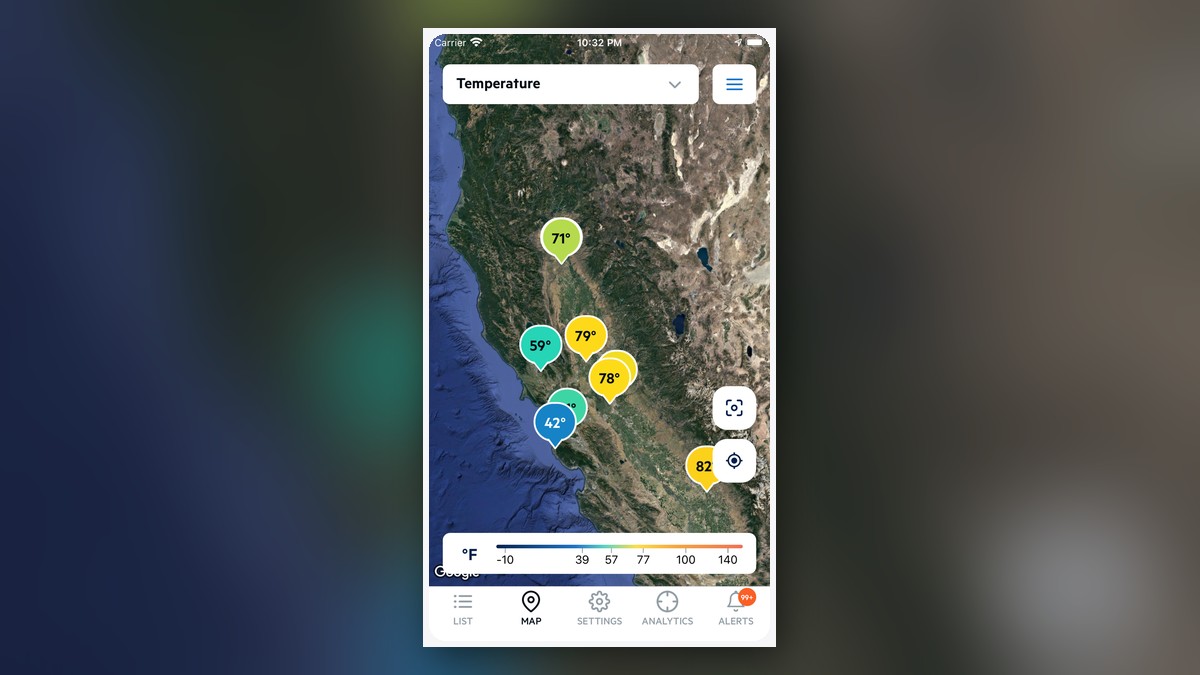
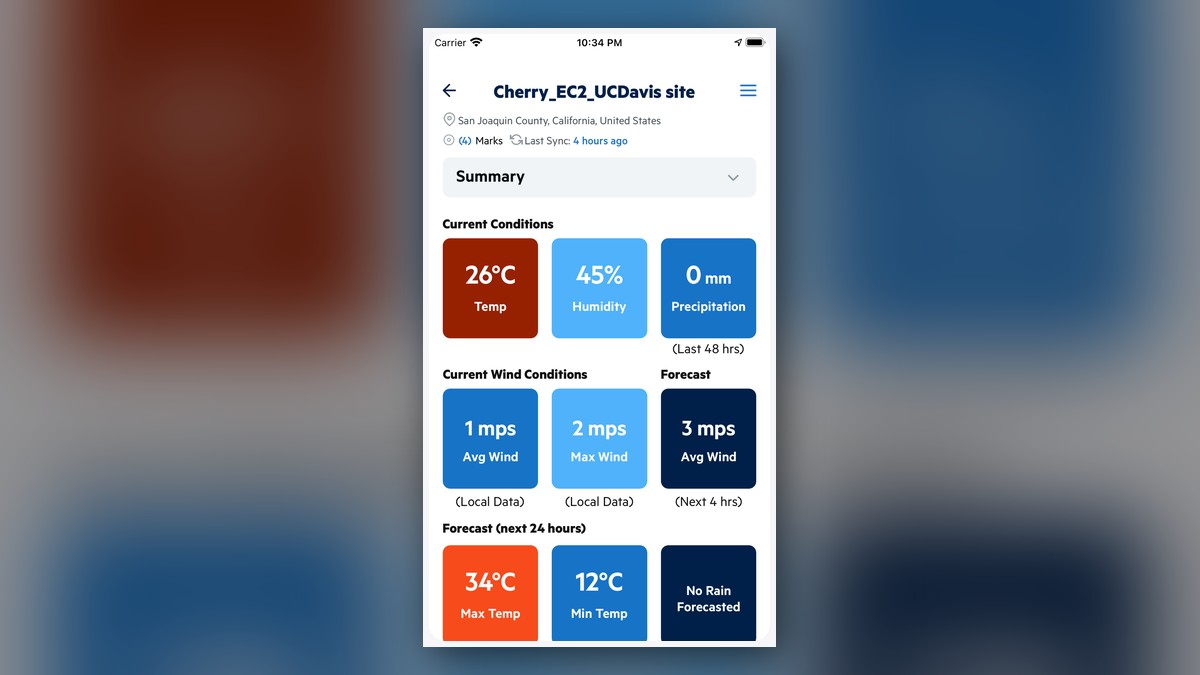
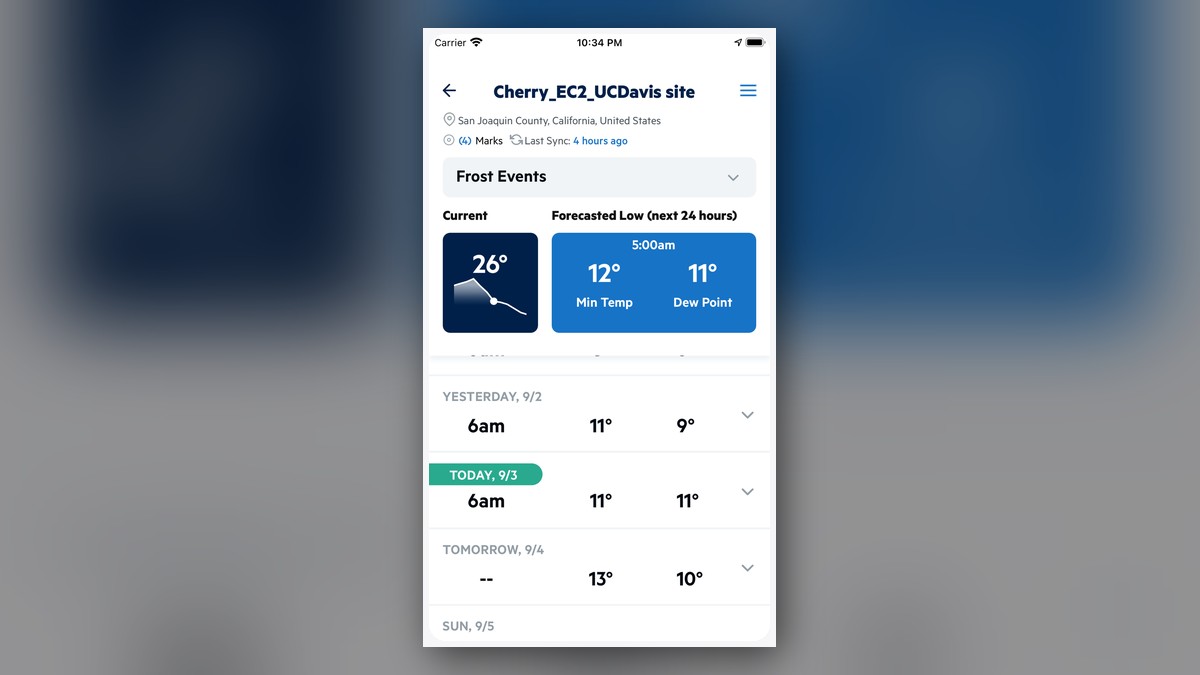
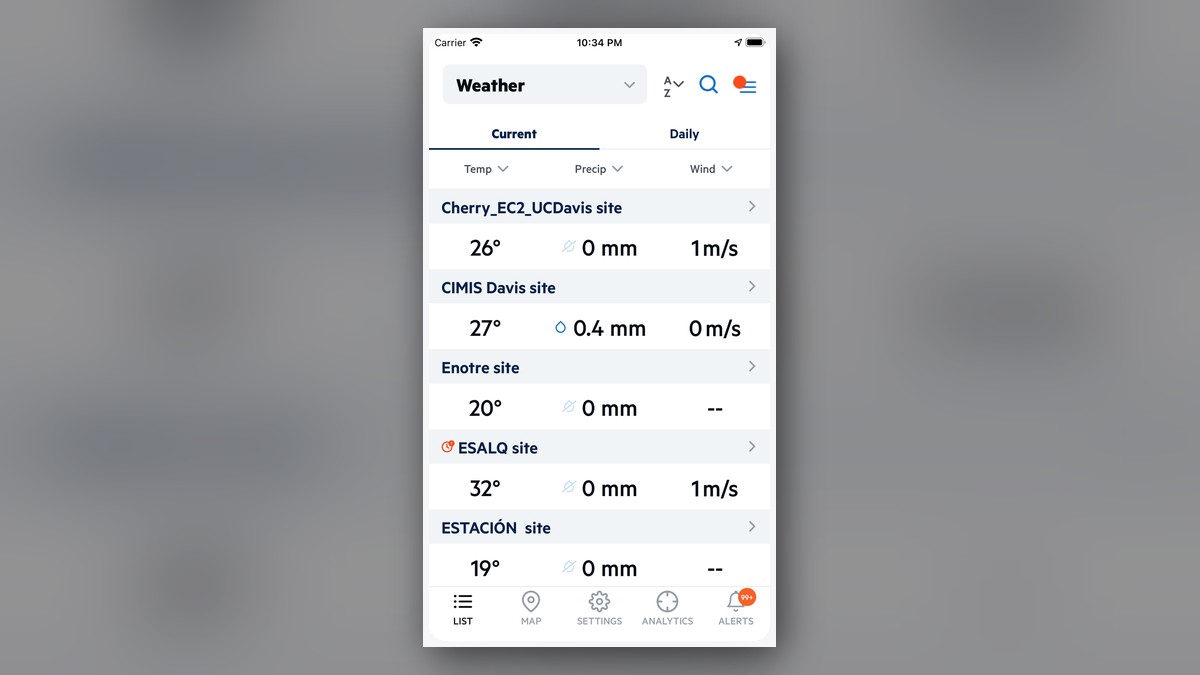
Arable Mark 3 is a solar-powered sensor that sits in a field and reads the environment around the crop: air temperature, rainfall, humidity, solar radiation, and wind, plus soil moisture and irrigation data when you fit the optional add-ons. It carries a 22-band spectrometer, a thermal sensor that reads canopy temperature to about one degree Celsius, a 5MP camera that photographs the crop every day at noon, and a solar panel. Arable builds it to run all season without maintenance.
How it works
The Mark 3 is a stationary in-field device. You mount it on a pole above the canopy, and it stays in that spot all season logging conditions continuously.
What it records falls into three groups, following Arable’s own product pages:
- Environmental: temperature, rainfall, relative humidity, solar radiation, vapor pressure deficit, forecasts, and wind if you add the sonic anemometer.
- Plant: daily crop images, evapotranspiration (ETo and ETc), growing degree days, growth stages, crop water balance, NDVI, and chlorophyll index.
- Soil: moisture and temperature, which need Arable’s optional probe.
The 5MP camera returns one image each day at noon, and Arable pairs it with the weather and soil readings from the same period so you can see the crop and the conditions that surrounded it. Everything lands in Arable’s web and mobile apps, and a documented API at developer.arable.com pushes the same data into software you already run.
Arable Mark 3 key capabilities
| Capability | What you get |
|---|---|
| Crop stress alerts | Spectrometer and canopy temperature readings flag plant stress, often before it shows up in the field |
| Evapotranspiration tracking | ETo and ETc values that show how much water the crop is using, for irrigation decisions |
| Daily crop photos | One 5MP image of the crop at noon each day, with the weather and soil readings from the same period |
| Weather and soil sensing | Temperature, rainfall, humidity, solar radiation, vapor pressure deficit, wind with the add-on anemometer, and soil moisture and temperature with the optional probe |
| API access | A documented developer API for pulling Arable data into your own systems |
| No maintenance | Solar powered, with no moving parts |
Who it’s for
Arable sells the Mark 3 device and its analytics subscription to farmers and crop advisors who want readings from a specific field rather than a regional estimate. Arable’s own collateral also names research and product development teams running field trials, food and beverage companies working on supply chain and sustainability programs, and crop advisory services that would rather monitor fields remotely than drive out to them.
The live listing puts it plainly: the Mark 3 serves farmers and agronomists who want ground-level truth from specific fields rather than satellite estimates.
Getting started
- Request a demo. Fill in the form on arable.com, or contact Arable’s sales team directly.
- Choose your sites. Decide which fields get a sensor, and whether you need the add-ons: the sonic anemometer for wind, the soil moisture probe, or the irrigation pressure switch.
- Install the unit. Arable says the Mark 3 sets up in under five minutes and activates with a single button push. For Arable Water customers, Arable’s own team handles installation and grower training.
- Connect the data. Readings and daily images appear in Arable’s web and mobile apps. Use the developer API to feed them into farm-management software.
Pricing & availability
Arable does not publish price points. The hardware and the analytics subscription come as one package, so pricing depends on sensor count and coverage needs. The live listing says the same thing:
“Pricing is not published. Arable sells the hardware and the analytics subscription together, so you talk to their sales team for a quote based on how many sensors and what coverage you need.”
Related tools
- Climate FieldView – satellite-based imaging alternative.
- John Deere Operations Center – machinery data platform.
- Plantix – free photo-based disease diagnosis.
- AI crop-monitoring category – category overview.
Features
FAQ
How much does it cost?
Pricing is not published. Arable sells the hardware and analytics subscription together, so you talk to their sales team for a quote based on how many sensors and what coverage you need.
What does the device measure?
Air temperature, rainfall, humidity, solar radiation, wind, and soil and irrigation data, using a 22-band spectrometer, a thermal sensor, a 5MP camera, and a solar panel.
Does it need maintenance?
No. It is solar-powered and designed to run without maintenance.

Leave a Reply